
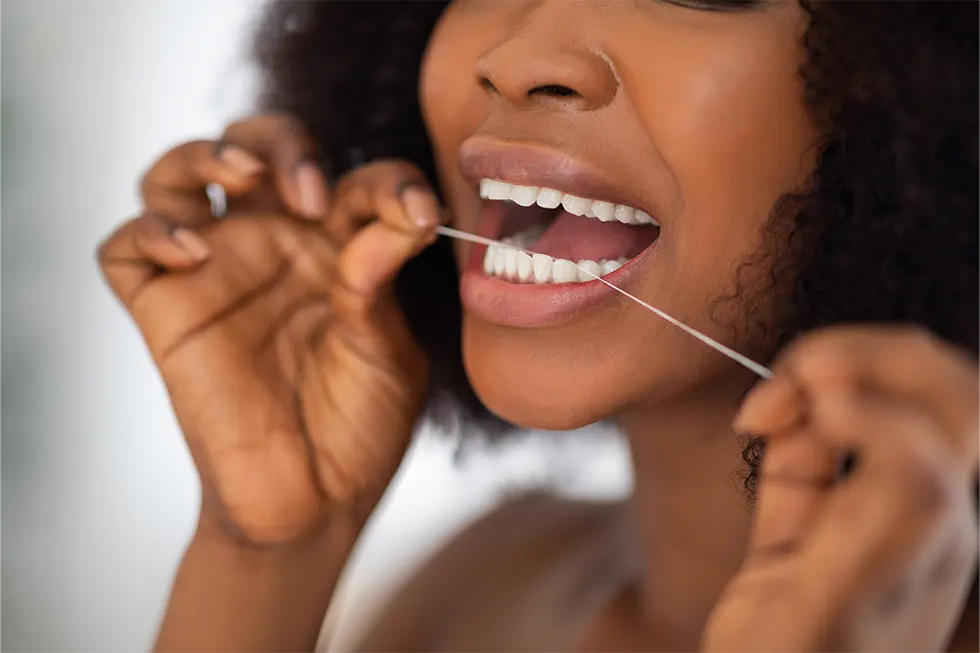
If you’re trying to choose between a water flosser and regular dental floss, the answer isn’t as simple as one being better across the board. They both help with cleaning between your teeth, but they work in different ways.
Dental floss slides between the teeth and helps scrape away plaque. A water flosser uses a stream of water to rinse between the teeth and around the gum line.
For many people, dental floss is still a great choice for plaque removal, especially in tight spaces. Water flossing can also be helpful if floss is hard to use, uncomfortable, or something you never seem to stick with.
The better choice usually depends on your teeth, your gums, and the routine you’ll actually keep up with.
The Quick Answer
If you’re focused on removing plaque from tight spaces between teeth, dental floss does a great job when it’s used properly. It makes direct contact with the sides of the teeth, which helps remove sticky buildup before it hardens into tartar.
A water flosser can also be helpful, especially for rinsing out food particles, cleaning around dental work, and supporting gum health. It can be easier for people with braces, bridges, implants, crowns, or sensitive gums.
For some people, one tool is enough. For others, using both makes the most sense.
What Dental Floss Does Best
Dental floss is simple, inexpensive, and easy to keep in a purse, car, desk, or bathroom drawer. It works by sliding between the teeth and gently scraping the sides of each tooth.
That scraping action matters because plaque is sticky. If it stays on the teeth too long, it can harden into tartar, which needs to be removed during a professional dental cleaning.
Floss is especially useful for tight spaces because it can slide into narrow areas and make direct contact with the tooth surface. A water flosser may rinse through the area, but floss can do a better job of cleaning where the teeth touch.
Technique makes a big difference. Instead of snapping the floss straight down, guide it gently between the teeth, curve it around the side of each tooth, and move it up and down near the gum line.
If your gums bleed when you floss, it doesn’t always mean flossing is bad for you. It may mean the gums are irritated or that plaque has been sitting along the gum line. Bleeding that continues should be checked by a dentist.
Where Floss Can Be Frustrating
Even though dental floss works well, it’s not always easy to use.
Some people have very close contacts between their teeth, which can make floss shred or get stuck. Others have braces, bridges, permanent retainers, implants, or crowns that make flossing more complicated.
Flossing can also be harder for people with limited hand movement or anyone who finds it awkward to reach the back teeth. And honestly, some people just don’t like doing it.
That matters. If the floss never leaves the drawer, it’s not helping your teeth or gums.

What a Water Flosser Does Best
A water flosser uses a steady stream of water to clean between the teeth and along the gum line. You aim the tip where the teeth meet the gums, and the water helps flush out food particles and debris.
Water flossers can be especially useful if you have braces, implants, crowns, bridges, or areas that are hard to reach with regular floss. They can also feel gentler for people with sensitive gums.
Many people find water flossing easier to add into their day because it feels less awkward than string floss. If you’re more likely to use a water flosser daily, that consistency is worth paying attention to.
Water flossers may also help reduce bleeding and support gum health when they’re used regularly and correctly.
Where Water Flossers Fall Short
A water flosser is helpful, but it’s not the same as dental floss.
The main difference is contact. Dental floss rubs against the tooth surface, while a water flosser rinses around it. That means a water flosser may not remove sticky plaque from tight spaces as directly as floss can.
Water flossers also cost more than a roll of floss, take up counter space, and need to be cleaned. They can be a little messy at first too, especially while you’re figuring out the right angle and pressure setting.
For some people, water flossing works well on its own. For others, it’s better alongside regular flossing.
Which One Removes Plaque Better?
For direct plaque removal, dental floss usually has the advantage because it physically scrapes the sides of the teeth.
That said, technique matters. Rushed flossing won’t do much. A water flosser used well every day may be more helpful than floss that only gets used once in a while.
If you’re prone to gum disease, cavities between the teeth, or tartar buildup, your dentist or hygienist may recommend one method over the other based on what they see during your exam.
Best Option for Braces, Implants, and Dental Work
A water flosser can be a great option for cleaning around braces,implants, bridges, crowns, and other dental work. These areas can trap food and bacteria, and string floss isn’t always easy to move around them.
For braces, a water flosser can help rinse around brackets and wires. For implants and bridges, it can help clean spots that may be harder to reach with regular floss.
That doesn’t mean floss is useless in these cases. Some people still use floss threaders, special floss, or interdental brushes. But if regular floss feels too difficult, a water flosser may make daily cleaning feel much more manageable.
Should You Use Both?
You can use both dental floss and a water flosser if that works for your mouth.
For example, you might use dental floss to clean between tight teeth, then use a water flosser around the gum line, dental work, or harder-to-reach spots.
It doesn’t need to be complicated. What matters is finding a routine that keeps your teeth and gums clean without making you dread it.
The Takeaway for Your Smile
When it comes to water flosser vs dental floss, the better choice depends on what your mouth needs and what you’ll actually use.
Dental floss is still one of the best tools for removing plaque from tight spaces. A water flosser can be easier to use and helpful for cleaning around the gum line, braces, implants, bridges, and crowns.
If you’re not sure which option is right for you, Langley Village Dental can help. During your next visit, the team can look at your teeth and gums, talk through your current routine, and recommend an interdental cleaning option that makes sense for your oral health.